I can’t count how many times I’ve watched the movie. As a teenager, I had the entire script memorized. I copied it onto VHS from a TBS broadcast. I bought the “official” VHS (which was different from what aired on TV). It was by far my favorite movie of all time, and as a fan of high fantasy, Dungeons & Dragons and all that – Conan fit right into my sweet spot. I also loved that as a character, Conan didn’t rely on magic, mutant powers, or high-tech toolbelts. He was just a man with an iron will. The Robert E. Howard books the movie draws from are also great, of course, and I’ve ready them all. Multiple times.
The soundtrack has absolutely stuck with me over the decades, and I still love it when Riders of Doom comes up on my random “workout” playlist. When I’m out running 10 miles, this is what I want. When I was a computer programmer for a living, I also loved to write code to the soundtrack when I was under pressure. Maybe it was the energy, maybe it was the drive and attitude, maybe it was just helping me embody the “one man versus the world” ethos… It’s powerful, dark, full of energy. The softer songs on the soundtrack are tender but mysterious. It really does evoke the feel of the world, which is what a good soundtrack should do.
My Favorite Soundtrack of All Time
Variations
I’ve found some interesting variations, like this album of the soundtrack transcribed for Organ on Spotify, and some nice covers.
Intersting version!
A nice acoustic cover of Theology/Civilization
Cool acoustic cover of The Orgy
The Recording Sessions
The music is well-documented on Wikipedia. The post is definitely worth a read, even for fans. Did you know Conan the Barbarian the last film released by a major studio with a mono soundtrack? Apparently Raffaella De Laurentiis balked at the cost ($30,000) of a stereo soundtrack and was worried over the paucity of theaters equipped with stereo sound systems
Thanks to youtube, I can finally see the actual recording sessions, which 16-year-old me would have loved back in the 80s
It’s amazing to see the recording sessions!
The Score
Amazingly, I also found the score online here, which is a great resource! I found out why the Anvil of Crom main theme tripped me up. The rhythm is a bar of 6:4 followed by a bar of 5:4. Pretty cool. Deceptively simple once you know what it’s actually doing, but my ear didn’t pick it up.
Blues in 2019 – indeed for the last couple decades – has been in an odd spot. If the music strays too far from tradition it becomes its own genre – it’s not blues anymore. The blues had a baby and they called it rock and roll. On the other hand, blues is accused of not evolving or keeping up with the times. Well, critics, you can’t have it both ways.
A vocal subsection of the blues community is to blame, though. There are traditionalists who have a very narrow definition of what blues is, and what blues should be. In my opinion, that’s counter to the history of the music. Blues evolved from field calls to acoustic troubadours, to full-on electric bands. Up until perhaps the 60s, blues melded with other genres like jazz and ragtime much more easily. Other genres influenced blues, and vice versa It had evolved. It was blue collar music for the people. It was spiritual. It was party music. It was a music of humanity, expressing a deep connection with the ups and downs of life. It was the soundtrack to both rural and urban life. It evolved with the changing times of 20th century America and the great migration of black folks from the rural south to the industrial north. Blues has enjoyed periodic resurgences in the 60s, 70s, 80s and 90s. All that said, I do think blues has and does continue to evolve. There’s a lot of great, contemporary blues written both by melding in contemporary influences, as well as addressing modern-day themes.
New Blues
A lot of blues artists make music firmly in the traditionalist camp – there are still songs written about mules kicking in stalls. That’s fine, there’s a place for it. I still enjoy Muddy, the Wolf, T-Bone, Robert Johnson and all the godfathers of the genre and if someone really does a cover of one of those classic songs well then that’s wonderful. Blues has survived so long in part because the classic songs are timeless. The themes are as relevant today as they were in the 30s, 40s, 50s… That said, blues made in the 20th century blues was timely! Those artists were expressing their now. I’d like to see more of that, and that’s how blues stays relevant and vital in the 21st century.
Gary Clark Jr’s “This Land” is a great example of what I’d consider modern blues. It blends in some modern influences in the music, lyrically it tackles contemporary issues, but it still retains enough elements of blues to be an evolution not a complete departure.
Gary Clark Jr.’s “This Land” – modern blues
One can also write new blues in a traditional style. The lyrics and approach can be very relevant and contemporary while retaining a more classic feel. There are lots of folks out there in the blues scene today doing it, but a great example is a song from Joe Bonamassa’s latest record titled “Just ‘Cause You Can Don’t Mean You Should.” Let’s see more of this!
Traditional Style, Modern Approach and Lyrics
What Makes It Blues?
What makes a music “not blues” anymore? To me, blue is defined by rhythm more than anything else. There are a million I-IV-V rock songs, but they’re not blues due to the lack of swing, they’re played very straight on the beat. Of course, blues is more than shuffles, but there’s always a swing. I think a lot of people get hung up on the chord progressions. There’s more to it than that. There’s also a lot more variety in blues than just I-IV-V. Go listen to T-Bone Walker. Listen to BB. Listen to early blue where the overlap with ragtime and jazz was more pronounced. This is a deeper topic, and I’ll cover it more in the future. For now let’s just say it’s a gray area, open to personal interpretation.
So Blues Isn’t Dead…
The real issue clouding blues’ evolution is its place in popular culture. This is the case for lots of music and indeed lots of art and media. Is blues dead? Is jazz dead? Is classical? Is rock dead? Is the guitar dead? Are drums even more dead? If you think those are true, then what isn’t dead? As long a people are creating and listening to blues, it’s not dead. Of course it doesn’t hold the same share of public mindset that it used to, but that’s okay, nothing stays at the top forever. If you look at the nature of the music business in this decade – the era of streaming and Instagram – blues is doing as well as any other popular 20th century music. Look at the myriad blues festivals out there, small and large? Look at the use of blues in advertising and movie soundtracks? As noted above, if blues needs anything it’s more contemporary songs. It doesn’t need to turn into EDM or hip hop. Adding those influences to blues might be great if it’s done well, but it can stay true to its roots and still evolve.
Keeping Up With New Blues
If you’re on Spotify, their “In The Name of the Blues” playlist is a good mix
There’s also the weekly Smokestack Lightnin’ radio show, which broadcasts out of WUCF in Orlando, Florida. Fortunately they stream online. They tend towards more traditional blues, but still great to hear new stuff. They’ve been at it for a long time and it’s a real treasure.
A simple google search will reveal a myriad blues festivals in every part of the country, all year long. There are a bunch of blues cruises. There are blues clubs, like my local Central Florida favorite, The Alley. There are lots of great, young blues artists out there. My message to them is: keep the spirit of the blues going strong by writing powerful, emotional and contemporary music that connects with people.
Okay, I’ll admit it. I gave in to relentless marketing. The weekly emails of offers from Blues Music magazine finally me when they offered a year of the magazine and Eric Gales‘ new album “The Bookends” for $20. I’m glad I jumped on it, though, because the album is great.
I saw Eric Gales for the first time on an Experience Hendrix tour a few year ago, and he was one of the highlights. It got him on my radar, but I didn’t get a good sense of what he was all about until I saw him on tour about a year ago. I had been pretty burned out on blues/rock for a while, but he restored my faith. So much raw passion and energy! It was way more than some cool guitar playing, although there’s plenty of that. It was the energy that got me. I also liked the funkier direction of his band. LaDonna Gales playing percussion on top of the typical power trio adds a lot. He dips into heavier rock than some more traditionalist blues/rock players, but also has the funk. It’s a great combination.
If you’re not familiar with Eric Gales’ story, it’s worth checking out. I bet he’d write a fascinating autobiography some day. Child prodigy, family band, fell down a dark path, but rose again and came back stronger than ever. His gratitude for making it through life alive and all the first-hand awareness of the dark sides of modern life make for good writing and powerful performances.
So, The Bookends. I’m not big on long-winded album reviews. You can listen yourself, and you don’t need me to go in depth into every track. I’ll talk about a couple of highlights and some other things that stood out.
1. Intro 2. Something’s Gotta Give (feat. B. Slade) 3. Whatcha Gon’ Do 4. It Just Beez That Way 5. How Do I Get You 6. Southpaw Serenade (feat. Doyle Bramhall II) 7. Reaching For A Change 8. Somebody Lied 9. With A Little Help From My Friends (feat. Beth Hart) 10. Resolution 11. Pedal To The Metal (feat. B. Slade) (Bonus Track – Remix)
My top three tracks are bolded above, but let’s talk about all the album highlights. The album kicks off with “Intro” – a bring-down-the-house, ripping-guitar instrumental. This is the kind of thing you’d play to get the crowd hyped up live. In this case, get the listener excited about the record. It sets the tone – a bit heavier than some prior records. “Watcha Gon’ Do” brings a heavy, funky riff to a song about pure lust. It’s hard to not move your body listening to it. The lyrics to “It Just Beez That Way” are poignant and honest, with a touch of humor. The tune is funky as all get out (I dig Eric calling out “that’s funky right there” at about 2:00), and it’s a little more upbeat and positive. “Somebody Lied” is one of the heaviest songs on the album, with lyrics that caught me by surprise. It’s a song I could hear Dug Pinnick doing with KXM or PGP (the “G” stands for Gales in that particular power trio). Heavy and heartfelt. “Resolution” is another instrumental, wide in scope, and to my ears may have been born from his jamming in “Don’t Fear the Reaper” in his live shows.
Of course, throughout the album Eric’s guitar playing is stellar. He also plays bass on “Something’s Gotta Give” and drums on “Something’s Gotta Give” and “Somebody Lied.” MonoNeon plays bass on most of the tracks, with Orlando Thompson on “Southpaw Serenade.” Aaron Haggerty lays down the drums, Dylan Wiggins is on Organ & Rhodes, and Vince Jones provides additional keys on “Somebody Lied.” LaDonna Gales adds backing vocals (which are great, by the way) and additional percussion. Another benefit of physical media, getting to read the liner notes. I had no idea who MonoNeon was, nor that Eric Gales played drums. Good to learn!
The mix is superb, and everything sound fat, warm and clear.
Finally, I want to call out the album artwork, with Eric in a bookstore or library. It’s a really cool visual, and the treatment to the photography gives it a warm, almost surreal look. Kudos to physical media.
Special Guests
I love reading liner notes. For instance, I learned MonoNeon played bass on most tracks, including the funky interlude at 1:50 into “Watcha Gon’ Do” which is probably my favorite bit on the album:
MonoNeon brings the funk to “Watcha Gon’ Do”
Beth Hart delivers her incredible and powerful vocals to “With A Little Help From My Friends.” Now there’s a package tour I would jump at. The similarity between their life stories make them a great pair. It’s not just knowing what the other has gone through, it’s coming out to a similar place after all that. They’ve done one-off collaborations at various events, but I’d love to see a tour. They’d kill.
Two of my favorite artists – let’s hope for a full tour!
Let me get right the the point: the value of a metronome is in helping you learn to feel subdivisions of notes in time at various tempos. What do 16th notes feel like at 100bpm? What do 8th note triplets feel like at 120bpm? How does it feel to play them on your instrument? What tempos give you trouble? What techniques cause your timing to slip? Where are your limits, and where do you feel your technique and tone changing to keep up? The value of a metronome is not in being a test to see how fast you can alternate pick a single note.
The value is in teaching you, not testing you.
It’s not a score card where higher is better. A metronome won’t magically give you great rhythm just because you play along with it. It can absolutely help, though, if you use it the right way.
Like any practice, it’s important to focus while using the metronome. You need to notice if you’re putting notes ahead the beat, behind the beat, or right on. If you don’t notice what you’re doing, you can’t control what you’re doing. That control is key to having good rhythm, in my opinion. You’ll just be playing notes on autopilot. if you tend to rush, you’ll keep rushing no matter what that part calls for.
Awareness leads to control.
Other Ways To Improve Your Rhythm
Since guitar is my primary instrument, I’ve tended to focus all of my coordination in my hands. Forcing myself to tap my foot while I play has helped internalize rhythm for me. It’s made rhythm a whole body thing. It’s forced me to put my attention on the one until that’s became somewhat automatic. It’s helped with my rhythmic deficiencies just as much as hours with the metronome.
For many years I was lazy and just relied on the drummer to keep time for me. I listened to the hi hat and snare, and of course I relied on the drummer to cue changes. What a missed opportunity! I never learned to keep track of the song as I played, so if I didn’t have those fills I’d miss changes. I never developed my own good timing. I think I was a decent rhythm player in terms of finding good parts to fit the song, finding good voicings that worked with the other instruments, and having a good sense of blues and swing… but that internal clock was never solid.
I started taking drum lessons in 2018, and even though I don’t put in as much time as I’d like I do practice consistently. Learning to play drums, even at a basic level, has helped me internalize the placement of notes. I hear them better. I can communicate them better. I have more awareness. I also have much better individual control over my hands and feet.
There’s no substitute for recording yourself and listening back. Think you’re spot on? Create some simple loops with, say, 2 bars of a 4:4 beat and 2 bars of silence. See how well you can come right back in on the 1. Then try 4 bars of rest. Then 8. I bet you’re not as solid as you thought. It’s tough! I’ve found my success with this exercise depends greatly on what I’m playing. If it’s just strumming a 4:4 rhythm, I’m pretty darn solid. If it’s improvising a solo with lots of complexity I’m rarely on, particularly after 4 or 8 measures. Some note in my phrases will throw me off a hair, but it’s shard to tell which.
I put a zip file with several drum loops (1-2 bars of 4:4 beat, 1-4 bars of rest) on dropbox. Feel free to download and enjoy!
Every note can be the right note if it’s played at the right time, for the right duration, with the right articulation.
Finally, I think it’s important to put rhythm in its proper place in your playing: first. Every note can be the right note if it’s played at the right time, for the right duration, with the right articulation. It’s all about the rhythm. Clap “Happy Birthday” – most people will know what that is without the notes. So the next time you play, keep your mental focus on the rhythm and groove. Don’t worry about which notes you play, think about when you’re playing them. Do this enough and it will become part of how you play.
Bonus Videos
Late addition, but I wanted to share these random videos which I found contained some great exercises for improving your timing, feeling playing behind the beat and getting more control over placement. Definitely worth your time to watch.
He explains exactly what I’m trying to say as well, and has a good exercise.
Prioritize some time – any time – to practice on a consistent basis and stick to it. For me the goal was 15 minutes a day, every day. Given family, work and other responsibilities, that was totally feasible and sustainable. I keep a spreadsheet of practice time, and since I’ve started this method and goal, I’ve averaged closer to 30 minutes a day, and around 6 days a week. I found that once I sat down to practice I could often squeeze in an extra 5 or 10 minutes. Skill acquisition = frequency x duration x intensity. You can’t always get a lot of duration, but you can control frequency and intensity. I practice more now with “no free time” than I did when I had all the time in the world.
I made a lot of lifestyle choices as well – that meant less TV, movies and video games. Almost none. When I *do* partake in those things, it’s great, I enjoy it and have fun. They aren’t something I do day-to-day, though. That every day use of very limited free time is for music.
If you want a copy of my practice spreadsheet (template) to get you started, just reach out via my Contact page. I’ll happily email you a blank 2019 version.
What’s Your Mindset Going in?
Think “what am I going to learn today?” instead of “how much time do I have to practice today?” You’d be surprised what you can learn in even 5 minutes. Go over that tricky measure and get it just a bit smoother. Run over that song you haven’t played in 2 months to refresh your memory. Practice reading a random song out of the Real Book.
When I first started the “15 minutes a day” thing I got obsessed with how much time I was logging in my spreadsheet. To my detriment, I looked at the clock and the calendar. I drifted into occasionally “mindlessly” noodling in order to get my 15 minutes. Any time with hands on fretboard is well-spent, but there’s a huge range in how much you grow over a given period. After a few years I started thinking more about what I was going to focus on learning in any given practice session, regardless of the time. It’s been much more productive. That doesn’t mean I slack off, I still put in my daily practice, but I get more out of it. I also feel better about it, because on those days when I only get 5-10 minutes it’s okay. I learned. That’s the point, anyways.
Time Off Is Okay, Too
Be okay with taking some time off. One year I practiced 7 months straight without missing a single day. Then I had to take a month off due to wrist pains and problems, and I got more than a little burned out. You have to find the balance of being dedicated and working through it, but also knowing your body and your mind. Don’t be lazy, but if you really need to step away for a little bit that might be the best thing. Ultimately, whether you practice 300 or 320 days out of the year won’t be a deciding factor in your development. What’s your commitment, what’s your routine, your habit. Is it frequent, consistent, focused practice? If so, then don’t fear time off. However, if you find yourself only practicing 3 days a week because you don’t “feel like it” then that’s a separate problem, addressed below. You have to want it, and you have to work.
Carlos Santana was once asked about what to practice and how to get inspired to write good songs. His answer, paraphrased, was “go live life.”
“Mechanical” Practice
Not feeling creative or inspired to pick up the instrument? You can still become a better player. Use your time to work on mechanical things: reading, metronome practice, learning new songs, maybe doing a lesson from a magazine. Once you sit down to do it, you can learn. I often go into modes of “mechanical” practice when I’m not particularly “feeling it” … and it pays off! Those hours of practice still count. This goes hand in hand with the “X minutes/day” routine – even if you’re not feeling inspired you can still make progress. After a few minutes of metronome work I often found myself starting to focus more, paying closer attention, and getting more out of the practice session than I hoped going in.
I would always say mindful practice is superior to “mindless” practice, but some of these mechanical types of things use a different part of your brain, or exercise more of your physical body than your mind. That’s okay, you’re still moving yourself forward as a player.
Set Goals
It’s been helpful to me to keep track of yearly goals. I’ve been playing long enough that I know the steps to get there. I don’t need weekly or monthly goals, but having those yearly goals helps a lot when I sit down and I’m just not sure what I should work on. I look over them and think about what will get me closer to achieving them.
Throughout the year I certainly change things around. Some goals fade away, some new ones are added. That’s fine, the point is to have something to work towards.
I do have some long-term goals as well. Those are more inspirational and aspirational, although some of my yearly goals get me closer. Those are more a matter of “can I put in enough practice at the right things to get there?”
Recommended Reading
These are some books that have inspired my practice mindset. I highly recommend checking them out.
I was in Austin last week, and as usual whenever I visit, I spent my Tuesday evening at the Saxon Pub. I usually go to see David Grissom at 6pm and keep it an early night, and he didn’t disappoint. This time though I stuck around to watch Sue Foley‘s set and really dug it. It’s always a treat to get to be blown away by an artist whose name you were familiar with, but whose music you weren’t.
I loved the mix of country blues, featuring lots of Memphis Minnie and Blind Lemmon Jefferson songs. She had a great rhythm and feel for blues, and blended that natural, organic feel with a precision of technique. It wasn’t surgical or sterile, it was perhaps the precision of confidence. She killed it. Her voice is sultry and expressive and sang with an easy authority that delivered the music.
She played a nylon-string acoustic, her drummer played brushes, and the bassist played an acoustic, upright bass. It was a perfect complement to David Grissom’s electric guitar-heavy set.
Being inspired by the set I started digging into her catalog. I particularly like her album “The Ice Queen.”
If you’re a fan of great blues, played with honesty and love, steeped in tradition but played with modern relevance, check out https://suefoley.com/ – you won’t be disappointed.
I got Steve Lukather’s excellent autobiography “The Gospel According to Luke” for Christmas this year and just finished reading. It was quite entertaining, if a bit scattered. There are lots of funny behind-the-scenes stories from his life in the studio and on the road, and lots of crazy adventures with other musicians. One of the best was when Miles Davis showed up and got freaked out by a stuffed dog. I do wish there as a little more meat on the bones in terms of music, but I get that he has such a vast career it would be hard to go in depth with much. His discography – included at the end of the book – is absolutely mind-blowing.
I had never paid much attention to Toto. I knew the hits, but they were alway a softer, more polished band than I was into in the 80s & 90s. Listening with older, wiser ears, and reading about the ups and downs of the band has given me an opportunity to revisit.
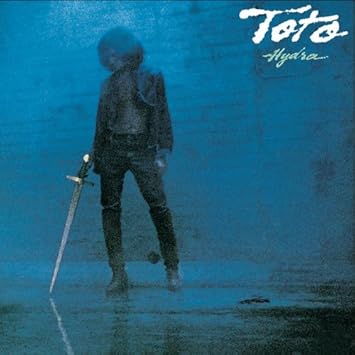
In the book he talked about Hydra being their proggy album and that definitely caught my attention so I’ve been listening to that lately.
It’s a nice combination of catchy, poppy hooks, interesting rhythmic devices and songs that go beyond traditional “I love you fare. As expected, the songs are longer and more involved. Of course there’s killer playing all around and as a guitarist it’s cool to hear Luke kill it on every track. What I like about this album is the variety – Hydra, All Us Boys and White Sister absolutely rock. 99 and Mama are a little softer. Hydra and St. George certainly dip into prog territory. It’s tonally diverse and the production is top notch. I’m really digging it. If you overlooked Toto like I had, or only know them from “Rosanna” or “Africa,” give Hydra a shot.
There’s lots made of originality. “So-and-so is good, but they aren’t doing anything new.” Thinking about the last century of popular music, or any music, really, and it’s hard to think of very many truly original bands, let alone guitar players. There are only so many Zappas and Hendrix’s and Eddie Van Halens to come around. And yet, there are a million really, really good guitar players whose music I love. I certainly distinguish between playing music that’s original and having a unique voice. The former is not a factor in whether I enjoy particular music, but the latter certainly is.
“Creativity is just connecting things. When you ask creative people how they did something, they feel a little guilty because they didn’t really do it, they just saw something. It seemed obvious to them after a while. That’s because they were able to connect experiences they’ve had and synthesize new things.” – Steve Jobs
I’ve been a fan of blues for a long time. I would argue that there hasn’t been much original in blues in many decades. While I have a pretty broad personal interpretation of the genre – I’m not a purist – I do think that if it strays too much it’s not blues anymore. Just like rock and roll became its own thing. Does that mean there haven’t been any great records in 50 years? What about Muddy Waters’ 70s material? Was SRV doing anything original in the 80s? What about Buddy Guy’s 90s albums? What about Gary Clark Jr.’s live double album from a few years ago – that was cool as heck. I recently saw Billy Gibbons’ Big Bad Blues band in 2018 and it was one of my favorite shows of the year. None of this is original, but it’s still great listening. All of these players have a unique voice, have something to say, and they say it with passion and conviction. That’s what I care about. That’s what connects with me the music. When it comes to new blues, those are the things I listen for.
Here’s a bunch of new blues. I don’t know if there’s anything really original here, but there’s great music!
Genres seem to arc – there’s the initial creation of something new by combining things in new ways (jazz, rock and roll, metal, hip hop); then there’s the growth to mass appeal and wide creation; then there’s the descent into niche as the genre’s offshoots gain in popularity. This seems to be the natural way of things. Genres morph into new genres, elements are combined and fused. Influences build upon influences, and some fade away. All along the path of that arc, great music is created. That’s what matters.
Don’t get me wrong, when truly original artists come along it can be a beautiful thing. Then again, it can also be terrible. Lots of original stuff has gone by the wayside without a ripple in mass consciousness. It’s not that originality isn’t a good thing. It does seem important that music evolves, grows and explores. It’s just not a factor in what I like and don’t. Then again, I’m the kind of guy who can listen to Electric Ladyland for the thousandth time an still love it!
Eddie Lang, Jazz Guitar Pioneer
Lately I’ve been listening to Eddie Lang & Lonnie Johnson records, as well as a lot of Soft Machine… so you can probably tell I don’t care a lot about whether music is new or old, popular or not… original or not. I don’t know if either Eddie Lang or Soft Machine were particularly original in their day. They didn’t invent jazz or psychedelic rock, but they did have unique voices within their genres. I suppose they were pioneers. They helped the existing genres explore and evolve. They’re a link in that chain. Ultimately, they created great music that stands the test of time, and that’s what I’m drawn to.
How important is originality to you? What does it mean to be original? How do your listening habits align with the arc of genres?
I love books. I love music. It only stands to reason that I love books about music. While I tend to read a lot of biographies, in this list I want to tackle books that have had a big hands-on (brains-on?) impact to my making music. I’ve learned a lot from each one and many of them are almost reference material to which I come back frequently. They all get my personal stamp of approval, check them out!
5. The Art of Mixing
4. Behind The Glass
3. The War of Art
2. Modern Method for Guitar, Vol. 1
1.The Music Lesson
Instagram Update
This year I started using Instagram a bit more, and put up short videos about this top 5. Enjoy!
I had a chance to get to Atlantic Sounds this week and picked up their first album on vinyl, and that’s been getting spins, too. What a great band. There are so many bands like this from decades ago that I somehow missed over my last 45 years. Colliseum, Uriah Heep… it’s hard enough to keep up with new bands and new releases but there’s such a gold mine of music from decades past. Regardless, I’m enjoying it and I’m going to be digging deeper into their catalog.




 Guitar Vince